IM8 vs AG1 vs multivitamin
A practical guide to compare the options and choose according to your needs.
Read article
How to choose the best multivitamin for women over 50: which nutrients matter after menopause, what to check on the label, iron-free logic, and our ranked picks.


After 50, the best multivitamin is rarely the one with the longest ingredient list. It is the one with sensible doses of vitamin D and B12, no unnecessary iron, and a format you will actually take every day for months.
This guide compares practical buying criteria without presenting supplements as medical treatments.
Searching for the best multivitamin for women over 50 usually starts with a real observation: energy, sleep, bone comfort and recovery do not behave the way they did at 35, and the supplement aisle answers with hundreds of nearly identical bottles. The label "50+" on a box is marketing first. What actually matters is what changed in your needs, and whether a given formula answers those changes or just repackages a generic product with silver branding.
After menopause, three shifts matter most for supplement choices. Iron needs drop, because menstrual losses stop, so a formula loaded with iron is usually pointless and can even be counterproductive without a tested deficiency. Vitamin B12 absorption tends to decline with age, because stomach acid production decreases and B12 needs acid to be released from food, which makes the form and dose of B12 more relevant than before. And vitamin D plus calcium intake become central to bone health conversations, alongside protein and resistance exercise, because bone density loss accelerates in the years following menopause.
A good multivitamin for this stage of life is therefore not a magic anti-aging formula. It is a well-dosed safety net that covers the nutrients your plate sometimes misses, in a format you will take consistently. Consistency is the real active ingredient: a premium formula taken four days a month does less than a decent one taken every morning. That single idea should drive both the product you pick and the format you pick it in.
If you are not sure a multivitamin is even the right starting point, our vitamin needs quiz takes two minutes and helps you narrow down what your routine is missing before you spend anything.
Vitamin D sits at the center of the bone health conversation, and it is also the nutrient adults are most often short on, especially with indoor lifestyles and northern winters. Most quality formulas use D3 (cholecalciferol), which is the form your skin produces from sunlight. What varies between products is the dose and the honesty around it: look for a clearly stated amount on the supplement facts panel rather than a vague "vitamin blend". Remember that your total intake includes sun exposure, diet and any separate D3 product you already take.
B12 is the quiet one. Absorption declines with age, low B12 shows up as fatigue and brain fog that people blame on everything else, and the cheapest supplement forms are the hardest to use. Form matters here: methylcobalamin is the active, already converted form, and it is one of the clearest quality markers on a label. We dedicated a full guide to this topic: see our methylated multivitamin guide if you want the complete picture on active forms.
Calcium is best obtained from food first, and most multivitamins include only a partial dose by design, because large calcium doses in one pill are neither comfortable nor ideal. What a good formula adds is context: vitamin K2 (as MK-7) is increasingly included alongside D3 in premium products because the two work as a team in calcium metabolism. If bone health is your main concern, this D3 plus K2 pairing on the label is a good sign of a thoughtful formula.
Magnesium supports muscle function, sleep quality and energy metabolism, and intakes are commonly below recommendations. Forms are not equal: bisglycinate (also written glycinate) is the well-tolerated, well-absorbed option, while cheap oxide is poorly absorbed and can upset digestion. A formula that names magnesium bisglycinate on its label is signaling formulation quality.
This is the counterintuitive one. Before menopause, iron matters because of monthly losses. After menopause, needs drop sharply, and excess iron accumulates rather than flushing out. Routine iron supplementation without a tested deficiency is not recommended, which is why serious 50+ formulas are iron-free by design. If a blood test shows you are actually low, that is a targeted conversation with your doctor, not a multivitamin decision.
Practical rule: after menopause, prefer iron-free formulas unless a blood test shows you need iron. It is one of the fastest ways to filter the shelf.
Armed with the nutrient priorities above, the label check becomes fast. First, forms: D3 rather than unspecified vitamin D, methylcobalamin rather than plain cyanocobalamin, bisglycinate rather than oxide for magnesium, and ideally K2 as MK-7 next to the D3. Named forms cost more to produce, so their presence separates formulas that were designed from formulas that were assembled.
Second, what is absent. Iron, as covered above, should usually be absent. Mega-doses are another red flag: a serious brand explains why a dose is what it is, instead of stacking 1000 percent of daily values to look generous on the shelf. Proprietary blends that hide individual amounts behind a total weight deserve skepticism too, because they make it impossible to know what you are actually taking.
Third, the format against your real life. Capsules are compact and travel well, but a routine of five or six capsules a day gets abandoned quickly, and abandonment is the most expensive outcome of all. Drinkable formulas, like a morning powder mixed in water, replace several bottles at once and are easier to keep up because they attach to an existing habit: breakfast. Our guide to liquid and drinkable multivitamins goes deeper on that trade-off, including where drink powders beat ready-made liquid bottles.
Finally, the commercial layer: real price after discount, subscription terms you can actually cancel, shipping to your country, and a refund policy you have read before ordering rather than after. None of this appears on the supplement facts panel, and all of it shapes whether the routine survives past the first jar.
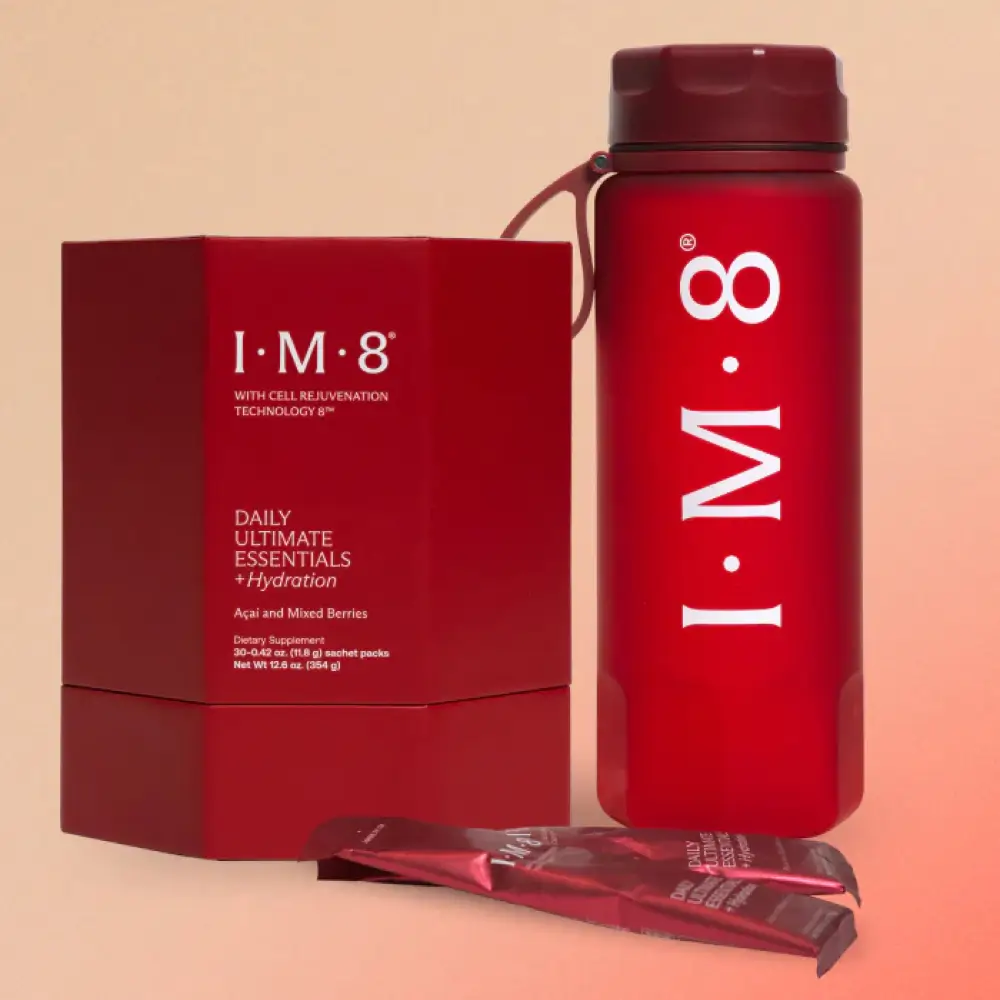
Daily Ultimate Essentials by IM8 is the main recommendation when you want one complete daily routine instead of a cabinet of separate bottles. It checks the specific boxes this guide cares about: the published label names its forms, including methylcobalamin for B12, Quatrefolic (5-MTHF) for folate, plant-based VegD3 for vitamin D, K2 as all-trans MK-7, and magnesium bisglycinate chelate. It is iron-free, drinkable, and replaces most of the single-nutrient capsules people stack after 50: multivitamin, greens, electrolytes, probiotics and joint support live in one scoop.
The honest trade-offs: it is a premium product at a premium monthly price, and it is an all-in-one by philosophy, so if you only want one isolated nutrient it is oversized for the need. It makes the most sense as a replacement for several products, where the per-month math becomes reasonable, rather than as an addition on top of an existing stack.
NAD+ Cell Formula by Life Extension fits a different profile: a science-led brand with decades of history and a focused formula aimed at cellular energy, interesting if healthy aging is your main topic and you prefer building a routine from targeted products you choose one by one. It does not try to be a multivitamin, and that is the point: pair it with a solid diet or a basic multivitamin rather than expecting broad coverage from it.
Collagen+ Eternity by Granions is the European pharmacy-style alternative on the collagen side, relevant if skin elasticity and joint comfort are the priority rather than broad nutrient coverage. Collagen is a different bet than a multivitamin: it targets connective tissue specifically, and it pairs naturally with the vitamin C already present in any decent daily formula. For a focused longevity angle, NAD+ Complete by Renue By Science also remains in our main comparison ranking.
Whichever direction you choose, keep the claim realistic: these products support a routine. They do not treat menopause and they do not replace your doctor.
Code verified and valid for 2026
The research on supplement habits is unglamorous: most bottles are abandoned before they are finished. Three tactics prevent that. Anchor the supplement to an existing fixed habit, ideally breakfast, because fat-soluble vitamins absorb better with food anyway and a floating "sometime today" habit is a dying habit. Prepare the friction away: the jar on the counter, not in a cupboard; the scoop in the jar, not in a drawer. And judge results on the right timescale: nutrient status moves over weeks, not days, so give any new routine a fair eight to twelve weeks alongside sleep, protein and movement before deciding what it does for you.
One warning applies specifically to the over 50 audience because it is the most supplemented age group: audit your stack before adding anything. If you already take separate D3, magnesium, B complex and a greens powder, an all-in-one formula is a consolidation move, not an addition. Adding it on top duplicates nutrients for no benefit. Line up your current labels against the new one, and retire the duplicates the day the new routine starts.
Code verified and valid for 2026
Needs shift after menopause: iron requirements usually drop, while vitamin D, vitamin B12, calcium and protein intake deserve more attention. A formula designed for daily long-term use, with transparent doses and no unnecessary iron, is generally a better fit than a generic product. Your doctor remains the right person to confirm individual needs.
Often not. After menopause, iron needs decrease and most guidelines suggest avoiding routine iron supplementation unless a blood test shows a deficiency. Check the supplement facts panel: many quality formulas aimed at adults over 50 are iron-free by design.
IM8 Daily Ultimate Essentials is the most complete option in this guide. It is a drinkable all-in-one formula that replaces several separate capsules, which makes daily consistency easier. The trade-off is a premium monthly price.
With or right after a meal, usually breakfast. Fat-soluble vitamins like D, E, K and A absorb better alongside food, and anchoring the habit to a fixed meal is the single best trick for consistency. Morning also avoids the mild sleep interference some people report with evening B vitamins.
A multivitamin covers nutrient gaps; it is not a menopause treatment and serious brands do not claim otherwise. Hot flashes, sleep disruption and mood changes belong in a conversation with your doctor, who can discuss options with actual evidence behind them.
No. A multivitamin supports daily nutrient coverage but it does not treat menopause symptoms and it does not replace medical care, screening or a balanced diet. Treat it as a routine support, not a treatment.

To continue reading, also see IM8 vs AG1 vs multivitamin, Methylated multivitamin guide and Daily supplement side effects.

A practical guide to compare the options and choose according to your needs.
Read article
A practical guide to compare the options and choose according to your needs.
Read article
A practical guide to compare the options and choose according to your needs.
Read article Partner offer IM8 Daily Ultimate Essentials is the most coherent all-in-one routine for someone searching for a...